@aparte/plugin-mermaid
Diagrams for aparté via Mermaid.
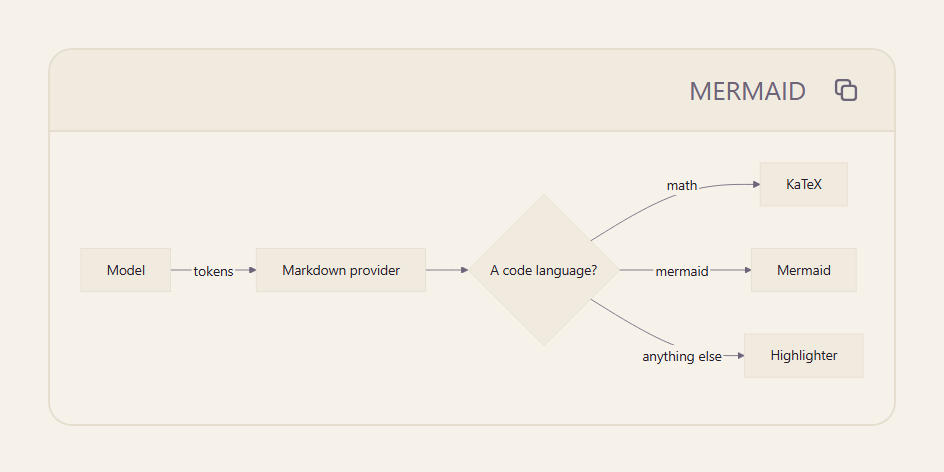
Every ```mermaid fence in a reply is drawn as a diagram — as it streams, whichever
Markdown provider is installed, or none.
npm install @aparte/plugin-mermaid @aparte/core mermaid
import { setupMermaid } from '@aparte/plugin-mermaid';

setupMermaid();
@aparte/core and mermaid (11.16.1 or later) are peer dependencies. Mermaid is loaded on
the first diagram, not before, and a diagram is drawn only once it comes near the screen, so
reopening a long conversation stays fast.
An image, so nothing in it can act on the page
Each diagram is an <img> of its SVG. A browser draws an image's SVG with no scripts and no
access to the page, so neither a label a model wrote nor a style inside the diagram can act on
the chat around it. Mermaid also runs with securityLevel: 'strict' and HTML labels off, and a
diagram's own %%{init}%% cannot turn either back on.
Mermaid draws before that image exists, in the page, and what a diagram names there is fetched at
that moment. Three things name a picture. A node's or an actor's own: A@{ shape: imageSquare, img: "https://…" }
or a sequence diagram's properties A: {"icon": "https://…"} would send a request to that address, so
the plugin asks Mermaid what it parsed, and a diagram holding a picture that is not inline
(data:image/…) is not drawn, however the source spelled it. A label Mermaid writes as HTML even
with HTML labels off, such as an architecture service's icon text: it goes through Mermaid's own
sanitizer with pictures, players, frames and styles forbidden, a rule a diagram's %%{init}%%
cannot lift. And a style: classDef c mask-image:url(https://…)
in a state or block diagram is fetched as soon as the diagram is measured, so a source holding a CSS
url(, image-set( or cross-fade( (or an @import) is not drawn, nor is one that styles
something and holds a backslash escape, which could spell one. A diagram that is not drawn shows its
source and the note that it could not be drawn. A Mermaid object that cannot be asked
what it parsed (setupMermaidWith with your own) falls back to refusing on the text alone, which also
refuses a label saying "img" in a diagram with shape data and a sequence diagram using the word
properties or details.
What that costs: the text in a diagram cannot be selected, and it is set in the system fonts, since an image cannot load the page's. A drawn diagram keeps its code card, so the copy button copies its source.
While a reply streams
The diagram is redrawn as its fence arrives — at most every 300 ms, or as long as the last drawing took — and keeps the last version that parsed. Once the fence closes, a diagram that does not parse shows a note and its source.
The chat's colours
The diagram takes its colours from the chat's theme (--aparte-bg, --aparte-text,
--aparte-primary…) and is drawn again when the theme changes. Its alt text is the diagram's own
accTitle or accDescr, else "Diagram"; set diagramAlt and diagramError with
extendLocale() to translate the fallback and the error note.
Options
setupMermaid(options?, config?) takes MermaidOptions:
| option | default | |
|---|---|---|
progressive | true | false draws a diagram once its fence has closed |
mermaid | {} | Mermaid's own configuration: a flowchart curve, themeVariables… |
Two entry points
@aparte/plugin-mermaid imports Mermaid on the first diagram. To hand it over yourself, use the
entry that imports nothing from mermaid:
import mermaid from 'mermaid';
import { setupMermaidWith } from '@aparte/plugin-mermaid/core';

setupMermaidWith(mermaid);
setupMermaidWith takes the instance, or a function returning a promise of it, and any object
shaped like MermaidLike (initialize, parse, render). Both functions return a disposer.
Mermaid keeps one configuration for the whole page, and the plugin calls initialize with its
own before every diagram it draws. If your page also draws diagrams of its own with the same
Mermaid, call mermaid.initialize(yourConfig) again before your own render() or run().
ESM only.